
Thailand can strengthen economic resilience by choosing strategic roles in global value chains, building domestic suppliers and aligning industrial policy with national capabilities
Key Points
- Thailand’s resilience will depend on its position inside global value chains, not simply on the number of foreign factories operating in the country.
- Industrial policy should focus on tasks Thailand can perform competitively, while linking multinational companies with capable domestic suppliers and research institutions.
- Semiconductor ambitions, AI infrastructure and energy transition projects will succeed only if they create skills, technology transfer and stronger local production networks.
Under the theme “Thailand’s New Horizon: Empowering People, Building Resilience,” Thailand is set to host the 2026 Annual Meetings of the International Monetary Fund and World Bank Group.
This theme arrives at a critical moment. The economy’s vulnerability to recurring disruption has been highlighted by recent flooding that impacted factories, supply chains, tourism, and small enterprises, alongside escalating energy prices and strained household budgets.
The core challenge lies in determining the most effective approach to establishing long-term resilience.
Recent expert analysis suggests moving away from generalized objectives toward strengthening Thailand’s role within global value chains. Building on this perspective, true resilience is not achieved by attempting to cover every sector, but by identifying critical tasks, excelling in them, and cultivating domestic capabilities that render the economy indispensable.
Strategic positioning as the basis of resilience
Driven by geopolitical friction, technological constraints, and supply chain disruptions, international firms are actively restructuring their operations. In this environment, the United Nations Conference on Trade and Development highlights the growing importance of “indispensability”, a policy designed to anchor a nation within key supply chain nodes that businesses cannot easily circumvent.
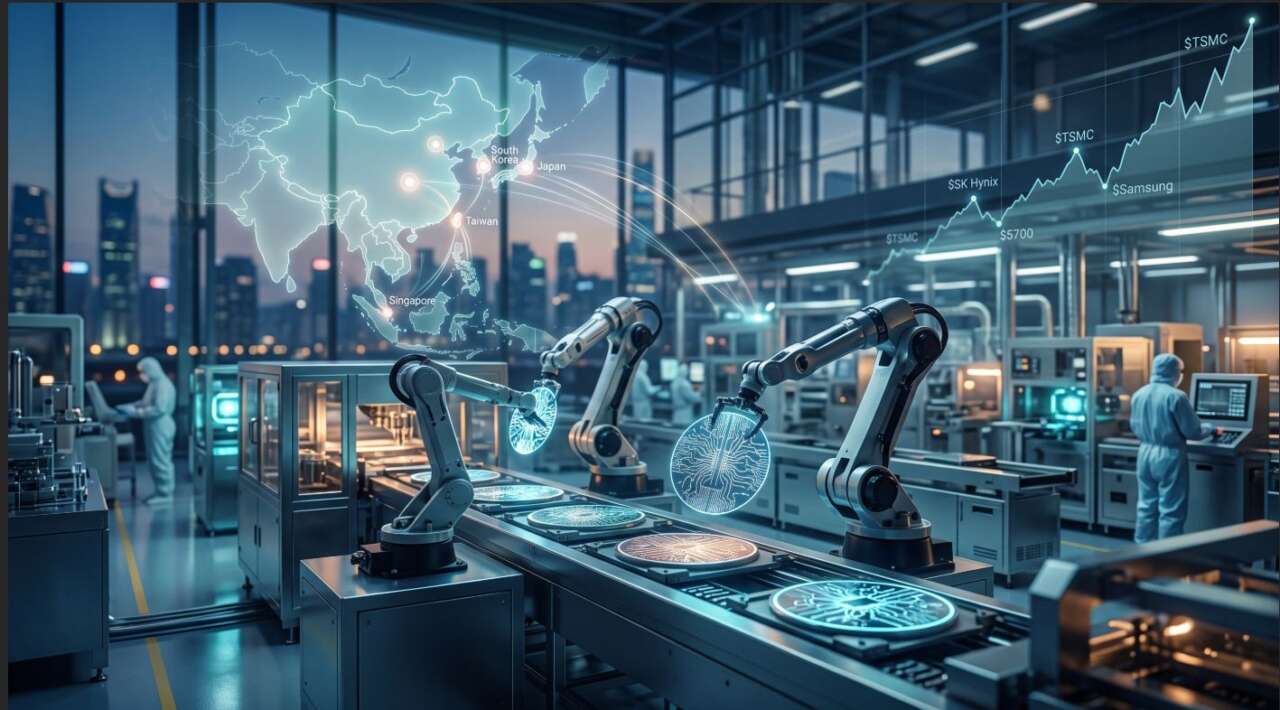
Rather than attempting to capture every available project in an aggressive regional contest for semiconductor facilities, data hubs, battery plants, green energy, and high-tech electronics, Thailand must adopt a focused approach. Securing headline-grabbing announcements does not inherently grant a lasting competitive advantage.
Instead, the key issue is identifying the specific segments of these global value chains where Thailand possesses a distinct comparative advantage.
Leveraging established expertise in automotive manufacturing, component production, electronics, food processing, logistics, and tourism provides a far more viable path to resilience than attempting a swift breakthrough across all emerging technological frontiers.
Consider Thailand’s semiconductor ambitions: while the goal is to cultivate an end-to-end ecosystem covering design, fabrication, assembly, testing, and advanced packaging, competing directly with market leaders in Taiwan, South Korea, or the United States would require immense capital and entail significant risk. A more pragmatic approach lies in targeting niche areas such as advanced packaging, testing services, power electronics, sensors, automotive microchips, and specialized capital equipment.
Ultimately, effective strategic positioning requires prioritizing the areas where Thailand can make itself truly indispensable.
Foreign investment is only the beginning
Thailand has attracted major international companies by offering investment incentives, industrial estates, a developed supplier base and access to regional markets. That model helped establish the country as an automotive and electronics hub.
It also created a structural weakness. Foreign companies often control technology, product design, procurement standards and the most valuable parts of the supply chain, while local firms remain concentrated in lower-value production.
A factory can create jobs without creating an ecosystem. A multinational can bring capital without transferring meaningful technological capability. An assembly operation can expand exports while leaving domestic companies dependent on decisions made at headquarters elsewhere.
Thailand’s investment policy should therefore measure what happens around a project. Does it develop local suppliers? Does it train engineers and technicians? Does it create opportunities for Thai firms to provide software, components, maintenance, logistics or research? Does it help local businesses meet the standards required by global customers?
These questions are more valuable than the headline value of an investment announcement.
The Bangkok Post article points to the importance of supply-chain linkages and cites global companies such as Western Digital, Seagate, Delta Electronics and Schneider Electric as examples of firms whose operations include domestic supplier networks. The governance of those relationships matters. Lead firms decide what suppliers produce, under which standards and with what degree of visibility and traceability.
Thailand should use that influence to create stronger local capabilities.
Domestic suppliers need a larger role
Small and medium-sized businesses form the third layer of many global value chains. They provide components, services, maintenance, transport, packaging and specialist labour. Yet they often lack the financing, certification and technology needed to become reliable partners for multinational companies.
This leaves Thailand vulnerable during a disruption. When a flood closes a supplier, an assembly plant can stop even when its own facility is protected. When a foreign firm changes its procurement strategy, local companies may lose their main customer with little warning.
Resilience requires more capable domestic suppliers. Public resources should support supplier development, technical training, digitalisation, certification and access to working capital. Universities and research institutes should work with companies on practical industrial problems rather than operating separately from production networks.
Large multinational companies also need clearer obligations. Investment incentives could be linked to supplier-development programmes, training commitments, joint research and technology transfer. The purpose would not be to force companies to disclose proprietary technology. It would be to ensure that public incentives help create capabilities that remain in Thailand after the original investment cycle changes.
A supplier should become a partner capable of improving products and processes, not a replaceable vendor competing only on price.
Thailand needs an infrastructure strategy built around risk
The recent floods show why resilience cannot be limited to company balance sheets. Roads, ports, airports, power systems, drainage networks and digital infrastructure connect the entire industrial economy.
Factories can invest in flood barriers, backup generators and alternative logistics routes. Smaller suppliers may not have the same resources. Regional infrastructure remains a public responsibility, and fragmented planning can create vulnerabilities that individual businesses cannot solve.
Thailand’s industrial strategy should therefore integrate climate adaptation. Investment zones need reliable drainage, flood-risk assessments and transport alternatives. Industrial estates should be evaluated on their ability to maintain operations during extreme weather. Data centres need stable electricity and water supplies. Food-processing hubs require cold chains and access to multiple transport routes.
As a report explains, the World Bank has identified urban flooding as one of Thailand’s significant climate risks, with Bangkok especially exposed because of its concentration of export-oriented industries.
Resilience investment may appear less attractive than a new factory or technology park. Its value becomes clear when it prevents production from stopping.
Growth must be selective
Thailand’s economic ambition has often been expressed through broad targets: becoming an EV hub, a semiconductor centre, a digital economy and a regional logistics gateway.
These ambitions can support one another, but they also compete for skilled workers, electricity, public funding and administrative attention. A country with limited fiscal and institutional capacity cannot pursue every strategic sector at the same intensity.
The Bangkok Post argument offers a useful principle: Thailand should identify the tasks it can perform better than others and defend that position. That principle should guide decisions on subsidies, training, infrastructure and foreign investment.
A country does not need to dominate an entire industry to gain strategic value. It may become indispensable in a specific stage of production, in a specialised component, in logistics between two markets or in the testing and certification of advanced products.
That approach is less dramatic than announcing a national ambition to lead every emerging sector. It is also more likely to work.
AI and energy will test the strategy
Artificial intelligence and the energy transition are creating new investment opportunities for Thailand. Companies are expanding data infrastructure, automation, electronics and clean-energy projects, while foreign investors are looking for alternative production locations across ASEAN.
These trends could raise productivity and diversify Thailand’s economy. They could also increase its dependence on imported technology, foreign expertise and energy-intensive infrastructure.
The country needs to ask how AI investment will benefit domestic firms. Will Thai manufacturers adopt tools that improve forecasting, quality control and energy use? Will local software companies become suppliers? Will universities produce the specialists required by the new economy?
The same questions apply to energy. Renewable projects can reduce exposure to imported fuel and support industrial investment, but Thailand needs reliable grids, storage capacity, efficient transmission and clear pricing rules. Clean energy will strengthen resilience only if companies can access it at predictable cost.
Investment becomes more valuable when it improves the systems used by the wider economy.
A resilient Thailand will know what to defend
Thailand cannot make every sector globally competitive. It can build a more resilient economy by identifying its strongest positions, developing domestic suppliers and connecting foreign capital with local capabilities.
That requires a shift in policy. The goal should not be to accumulate projects. It should be to deepen the networks around them.
The automotive industry, electronics manufacturing, food processing, logistics and tourism already give Thailand a substantial platform. New opportunities in AI, semiconductors and clean energy can reinforce that platform when they are connected to existing strengths and supported by the right skills.
The country’s next horizon will be judged by its ability to remain useful when global conditions change. A resilient economy can absorb a flood, a trade shock, an energy disruption or a technology transition without losing its productive core.
Thailand has spent decades building that core. The next task is to make it harder to replace, easier to recover and more deeply rooted in domestic capability.


