
The Thai economy softened in Q3 but showed recovery signs by September, driven by manufacturing growth, increased exports, and tourism. However, domestic demand weakened, and U.S. tariffs impacted exports.
Key Points
- The Thai economy softened in the third quarter but showed signs of recovery towards the end of the quarter. In September, economic activity picked up, driven by a rebound in manufacturing, rising merchandise exports, and increased foreign tourism receipts. However, domestic demand moderated, with both private consumption and investment softened.
- Manufacturing output expanded, driven by the resumption of petroleum and beverage production after temporary shutdowns. Automobile production also increased, particularly in the electronic vehicle (EV) segment.
- Merchandise exports increased, led by strong growth in electronics. However, exports to the U.S. slowed across several categories due to reciprocal tariff measures.
- The number of foreign tourists and related receipts increased, particularly among Malaysian and Indian visitors, supported by long holidays and launch of new flight routes.
- Headline inflation was negative in September, primarily due to falling energy and raw food prices. Labor market conditions remained stable. The current account posted a surplus, driven mainly by a trade surplus.
The Thai economy experienced a slowdown in the third quarter of 2025, with signs of recovery emerging towards the end of September. Key drivers of this recovery included a rebound in manufacturing, increased merchandise exports (especially electronics), and a rise in foreign tourism, particularly from Malaysia and India. However, domestic demand showed moderation, with both private consumption and investment softening.
Manufacturing output saw an expansion due to the resumption of production after temporary shutdowns, and automobile production, including EVs, also increased. Merchandise exports benefited from strong electronics demand, but exports to the U.S. were impacted by reciprocal tariff measures. The tourism sector received a boost from long holidays and new flight routes.
📊 Key Indicators
| Indicator | Change | Notes |
|---|---|---|
| Headline Inflation | -0.72% | Negative due to falling energy and raw food prices |
| Section 33 Contributors (Employment) | 0.0% | Labor market remained stable |
| Current Account Balance | +1.9 Billion USD | Surplus driven by trade balance |
| Private Consumption | -0.8% | Reflects domestic demand moderation |
| Private Investment | -4.5% | Significant drop, contributing to overall slowdown |
| Government Expenditure (excl. Transfer) | -2.5% YoY | Fiscal tightening or delayed spending |
| Export Value (excl. gold) | +0.9% | Boosted by electronics, but U.S. tariffs dampened some categories |
| Import Value (excl. gold) | +1.8% | Reflects supply chain normalization |
| Tourist Arrivals | +5.8% | Surge from Malaysia and India, aided by holidays and new flight routes |
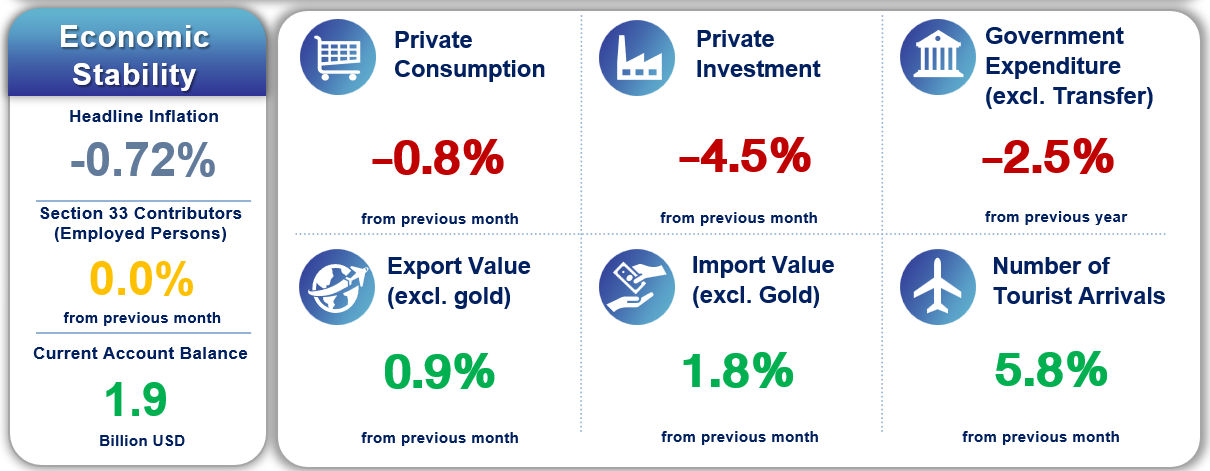
On the stability front, headline inflation was negative in September, largely due to decreases in energy and raw food prices. Core inflation remained positive. The labor market was stable, and the current account recorded a surplus, primarily driven by a trade surplus. Key areas to monitor moving forward include the sustained recovery of manufacturing, the effects of U.S. tariff measures on exports, ongoing developments in the tourism sector, and the impact of government stimulus and domestic purchasing power rebound.
Source : https://www.bot.or.th/en/news-and-media/news/news-20251031.html


